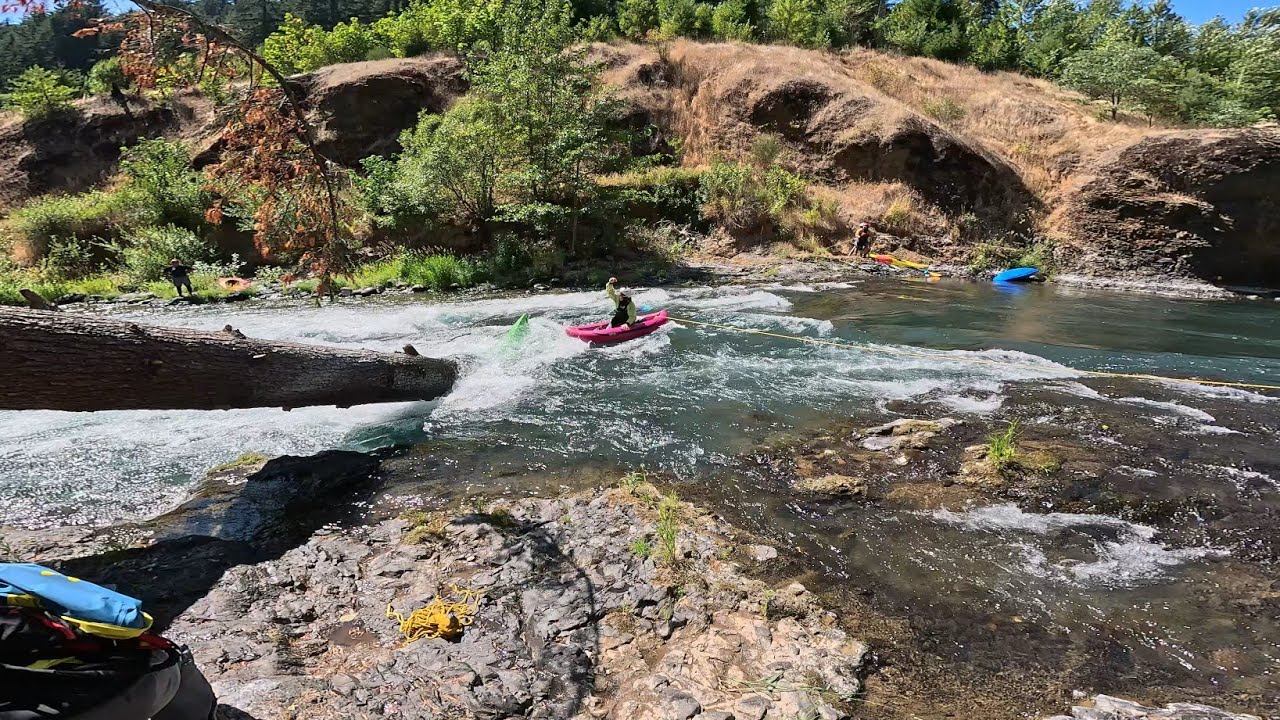
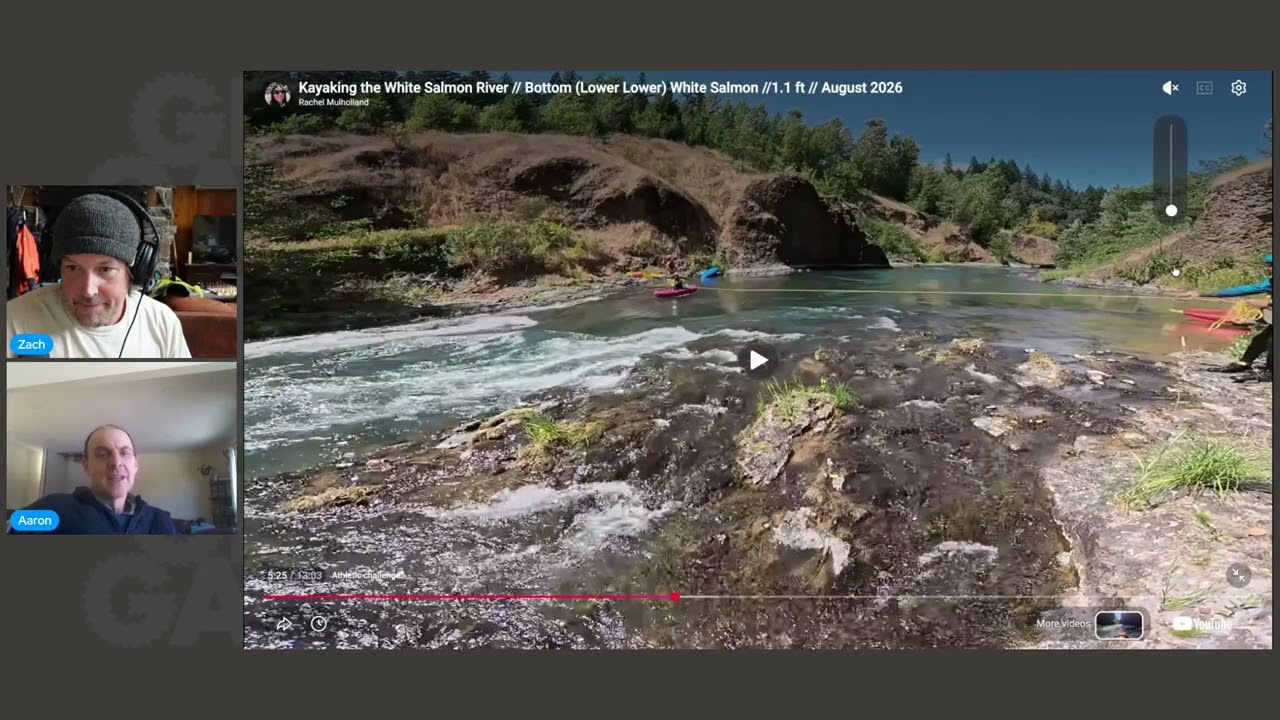
As a boater who was present during the pin, there were a couple constructive points upon reflection I think are worth mentioning.
A large group size can be a hindrance in a rescue situation unless a clear incident commander is established. There were several groups of paddlers who weren’t all familiar with one another. At the end of the day everyone was trying to be polite while also trying to figure out the boat rescue. No one made any poor decisions by any means to put paddlers in further danger.
It was a warm, sunny, and low water bottom lap with a wide variance of boating and rescue experience. With the swimmer safely on shore and lots of upstream and downstream paddlers in their boats, there was no real necessity to act quickly. After all, it’s just gear. As a result I think those with rescue experience didn’t speak up when a plan was already in motion.
My partner (the woman who suggested the tethered boat rescue) and I both have extensive rescue training and experience both in the States and abroad. We both at one point or another suggested alternate methods to unpin the boat over the initial attempts. Because there were no clear leaders these suggestions were either dismissed or not heard (to no fault of anyone else there, it was a natural cadence to the situation at hand given the group size, lack of urgency, and general unfamiliarity of all boaters present).
Had there been a live body either in or out of their boat in immediate danger, those with rescue experience would have undoubtedly spoken up immediately and taken control of the situation.
I believe a swift water rescue course, even at its basest level, is an incredibly valuable tool for anyone paddling class III or above. An important tenet of rescue training is to establish a clear leader to control the direction of action and information in these circumstances.
In retrospect I think it would have been valuable to ask all members in the group the extent of their rescue experience and pick an incident commander from that point to direct the flow and plan of action.
As someone who was very familiar with the concept and implementation of tethered boat rescues, Jessica was very comfortable with the duckey lower and bail out plan in case the boat flipped (which it ultimately did).
We’re all growing out there and I think it was a good learning experience!