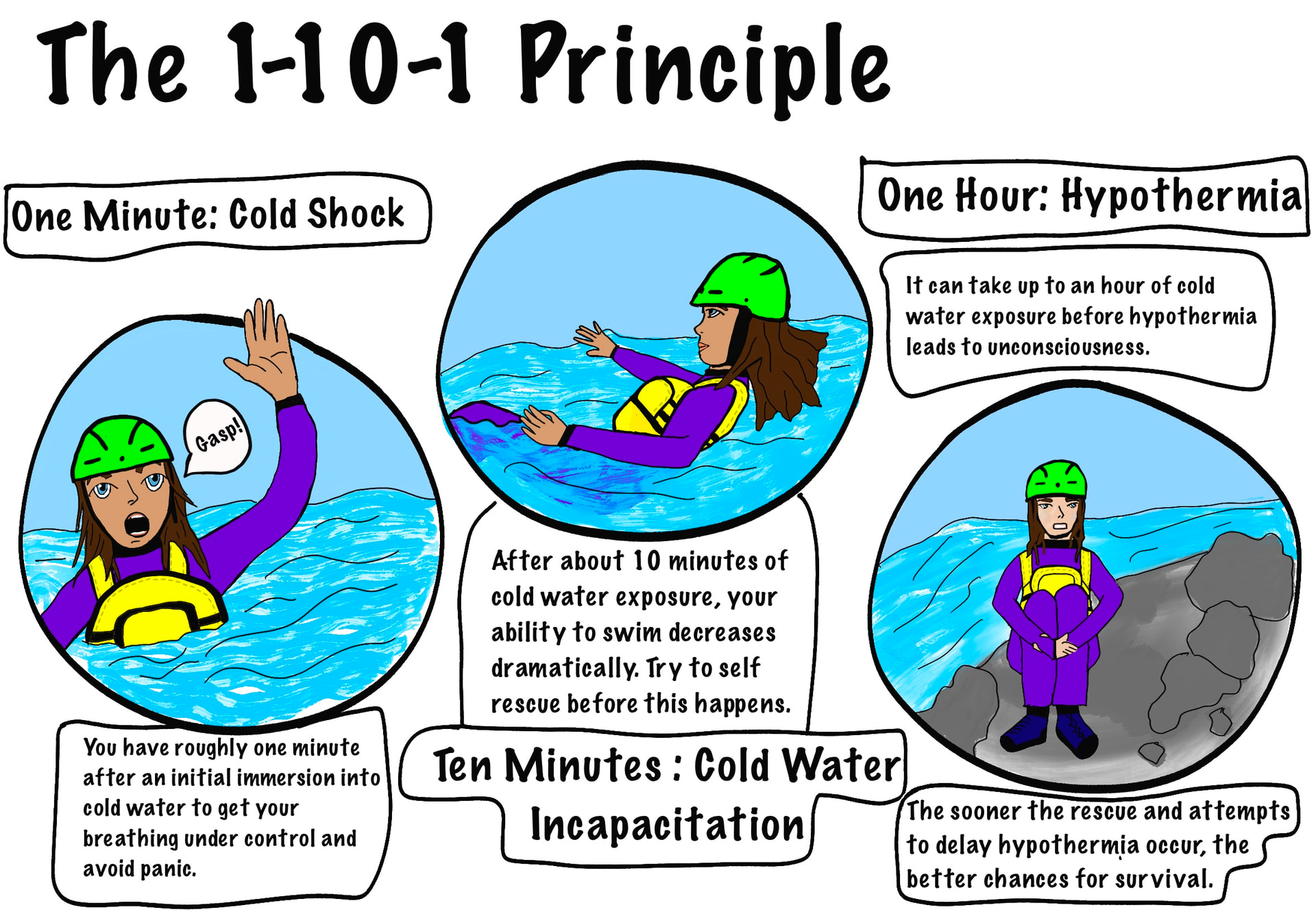
Hi everybody, what is your opinion of the 1-10-1 guideline for cold water shock response? This principle essentially states that with cold water exposure, you have one minute to get your breathing under control, ten minutes until you experience cold water incapacitation, and one hour until hypothermia will set in. Approximately.
I’ve seen some controversy online about it; some folks saying it oversimplifies what is actually going on with cold water exposure and is not scientific. They state it’s misleading. Others seem to view it as a handy guideline for approximately what to look for and when with exposure to cold water. Does anybody have any thoughts or opinions on this matter?
I find cold water shock hard to explain and hard to wrap my mind around. This simplification helps me cover the topic in a straightforward and simple way that more poeple can understand.
1-10-1 is a tool for decision making in the field, not the reasearch lab, for both for the resucer and the victim, as a baseline for close to freezing water enviroment where the victim is not wearing ppe, any neophrene or dry-wear equipment.
On the note of temperature there is though alot of difference between 1 deegree (celcius - I’m ‘european’) vs 4, 8 etc, the timeframes changes with every increasing degree. Also wearing any water gear, neophrene f.x., will change the metric for the better.
For the victim, understanding that the first minute after submerging is to get control of the breathing and orient themself instead of fight and flight response is important. Where I’m at, Icleand, I include this in the safety talk because our rivers are between 4-8 degrees celcius.
So overall, it’s a decision tool to be used in the field when you don’t have all the information.
2 Likes
This is a graphic I made for our safety manual. It’s accompanied with a description that tehse are guidelines and not exact timelines; the times themselves change depending on water temp, weather, PPE, body type, etc…
2 Likes