Hi everyone. I’m looking for thoughts and recommendations about removing the wood and pinned boat from Wildcat rapid on the Wild and Scenic Rogue River. There’s a video of what I already tried on my YouTube channel.
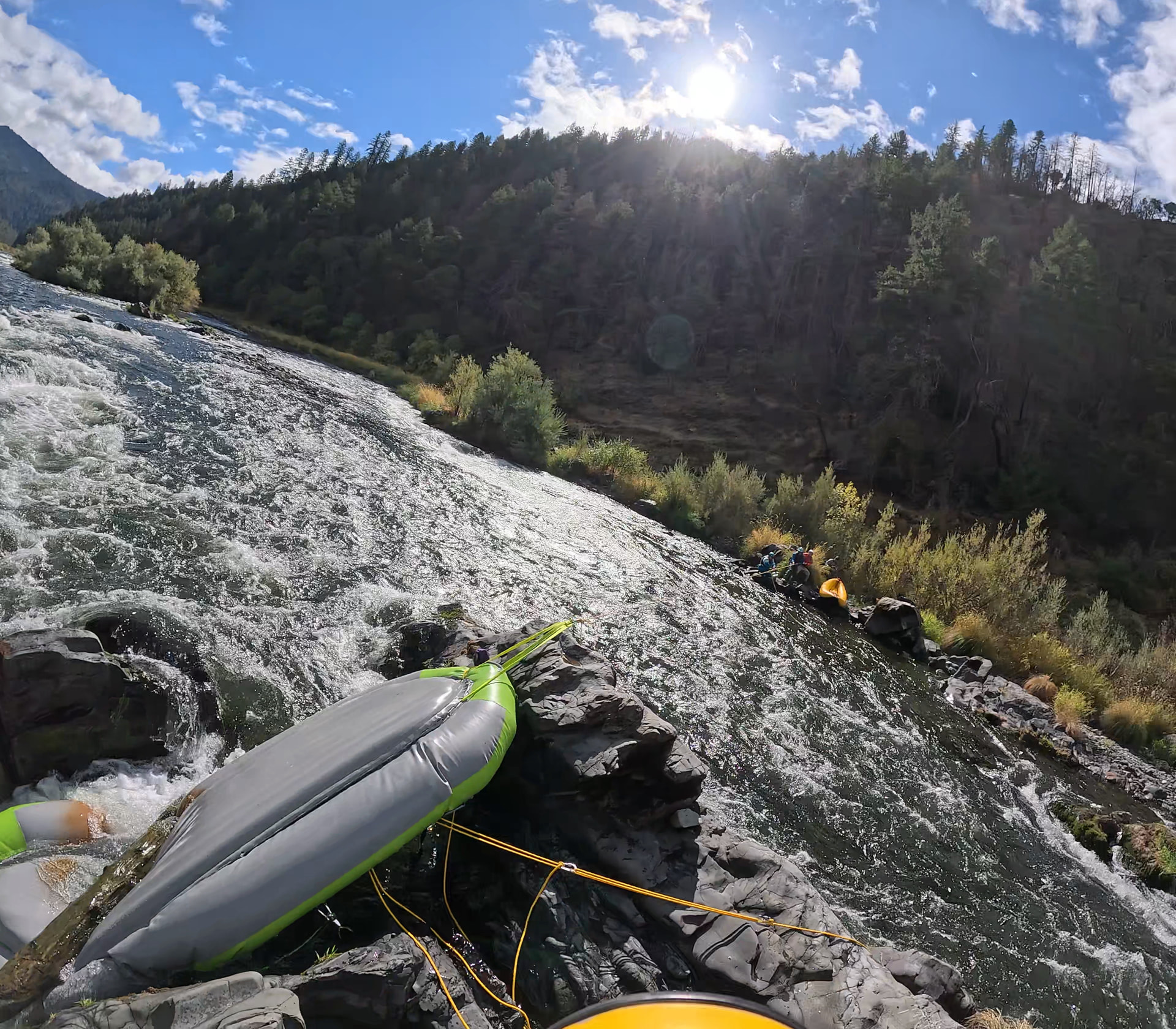
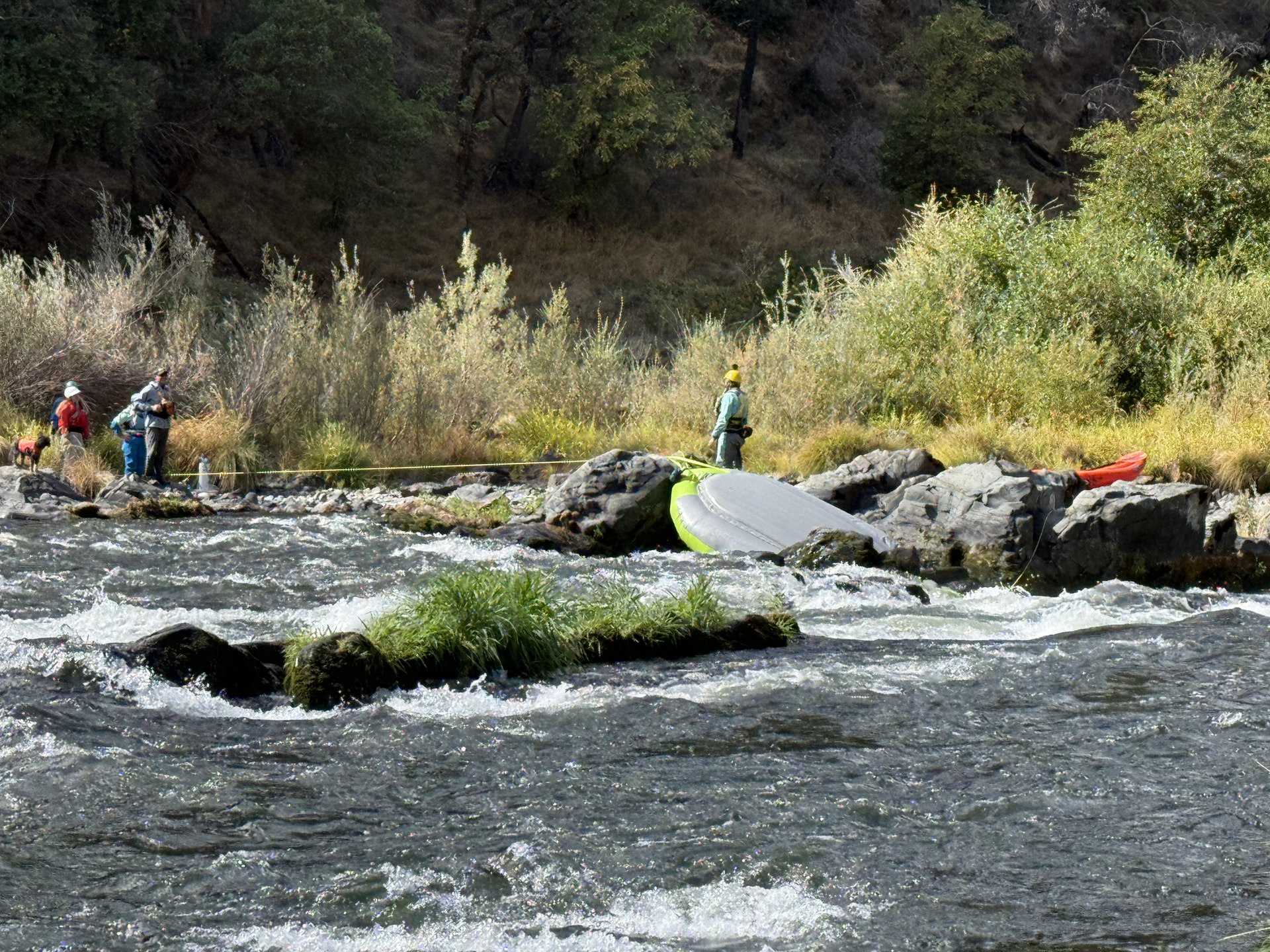
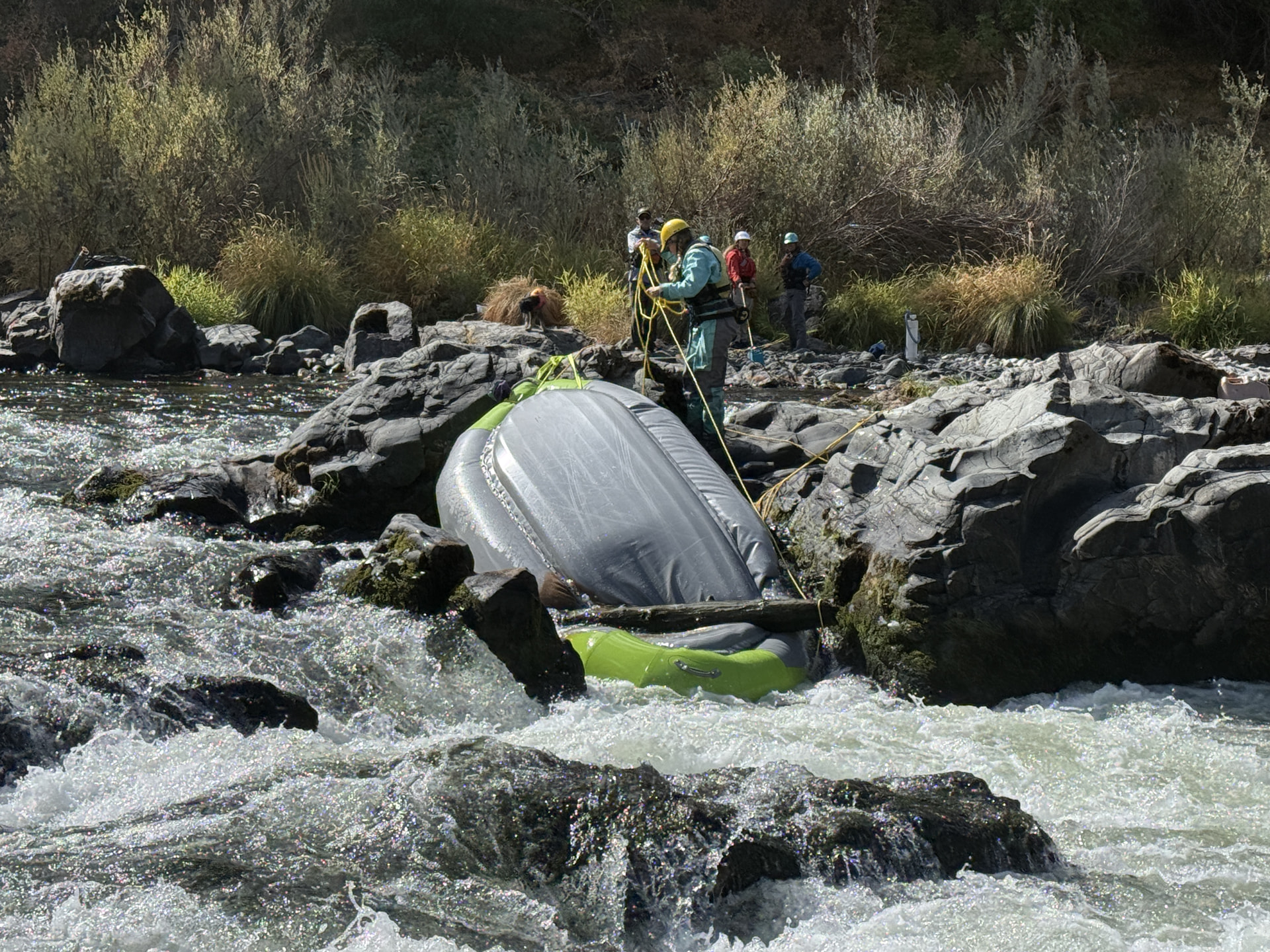
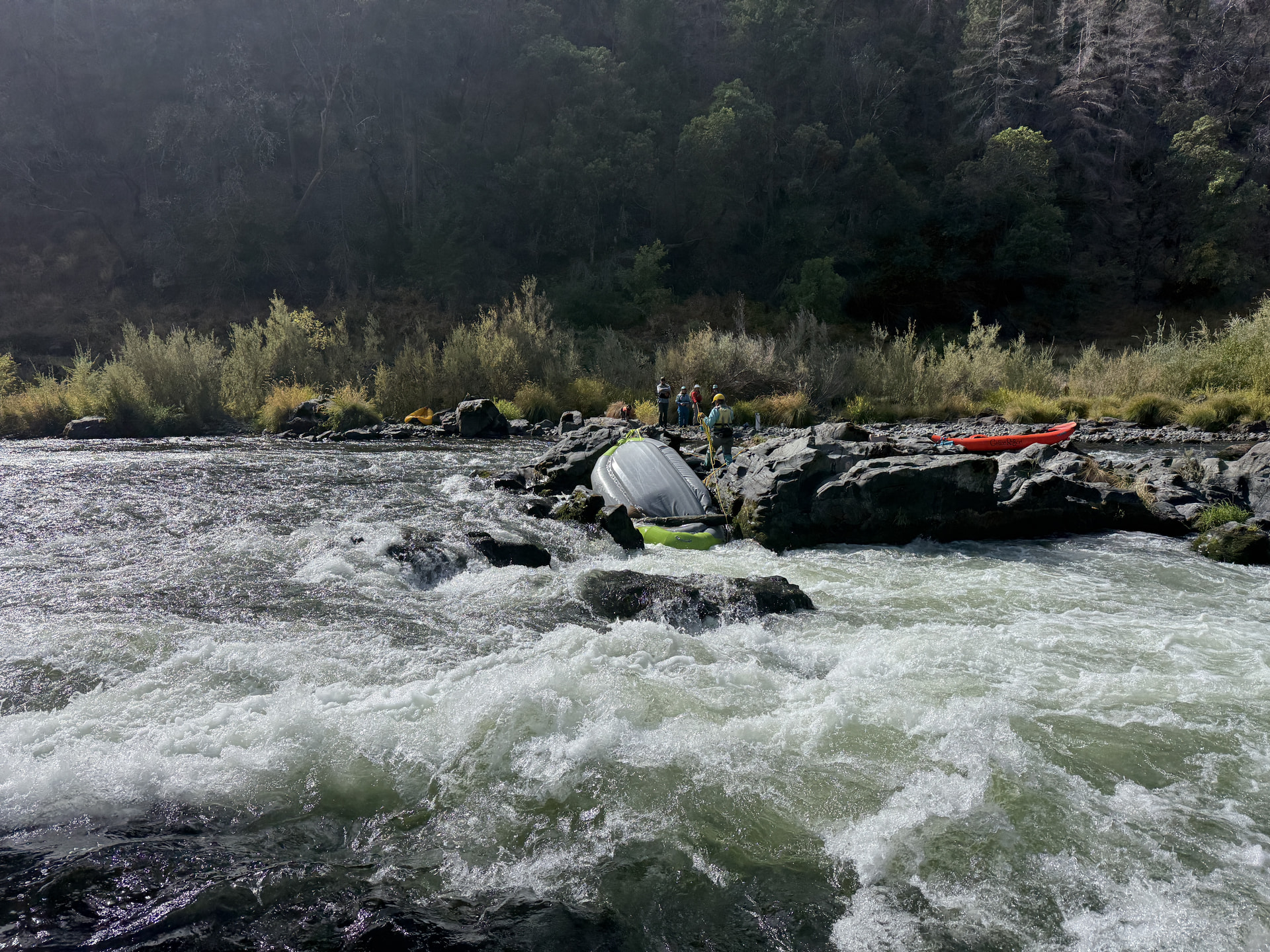
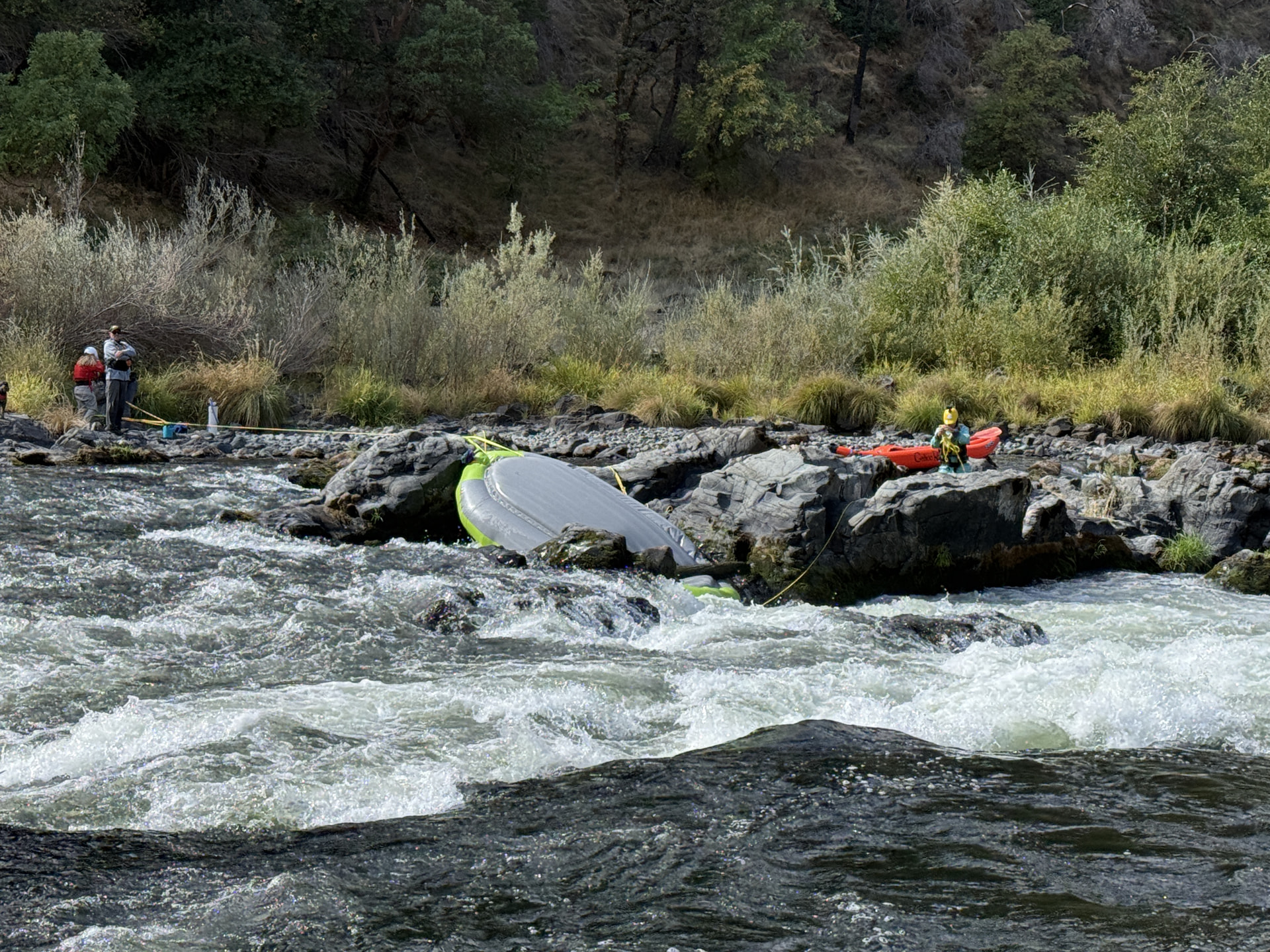
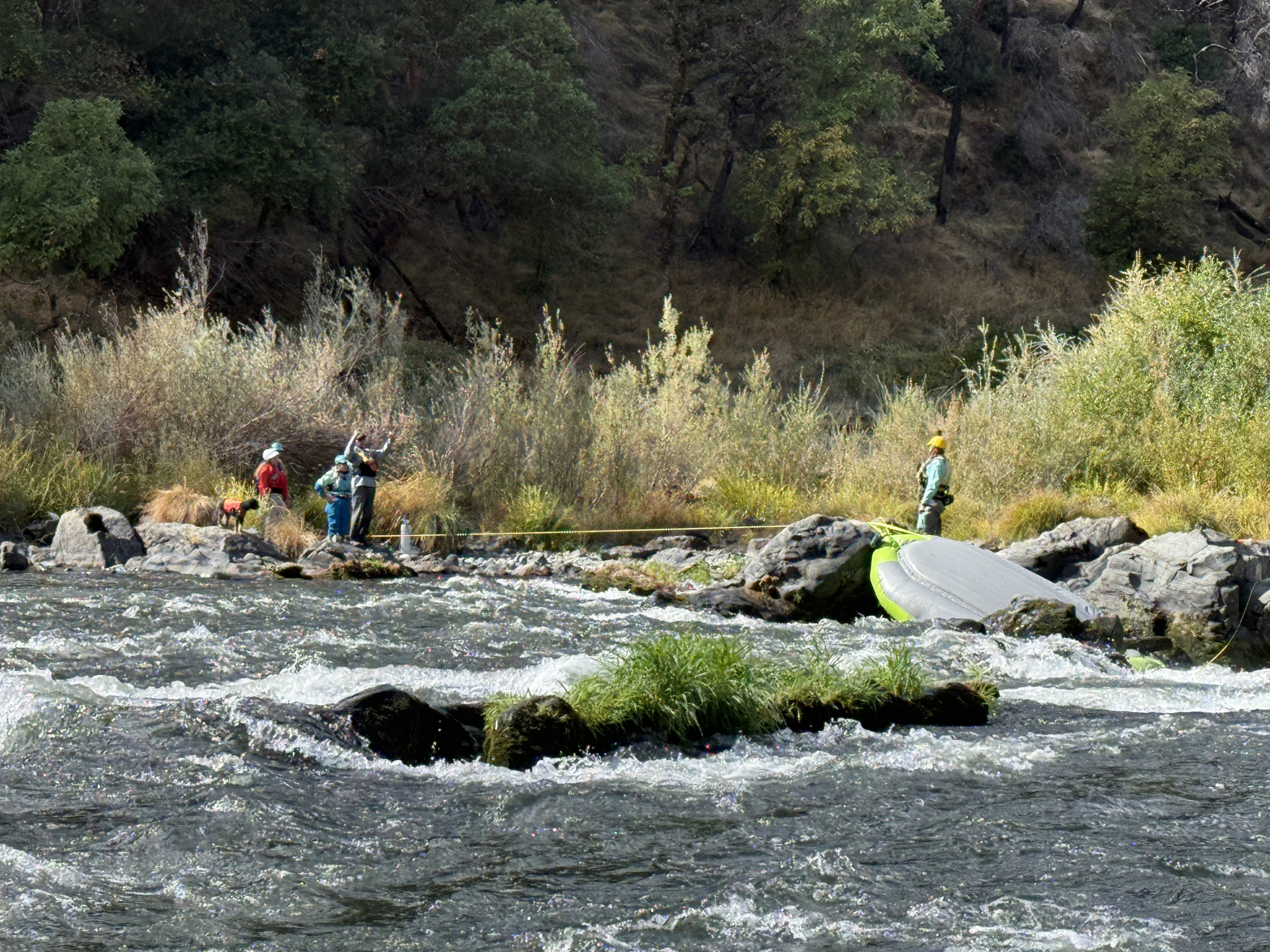
As of Friday 9/25 there is an upside down raft with a frame and a dry box pinned underneath the wood that is located in the slot on the main bedrock Island. The dry box and frame is wedged diagonally in the bedrock slot. The rubber part of the raft is pinched in place under the wood against the dry box. The upstream straps are inaccessible (underwater) to release the raft from the frame. There’s only one feasible anchor point out on the bedrock island to build mechanical advantage off of.
This is not the navigable channel. However, people end up in this slot all the time when they lose control of their rafts above. Working on this section for 15 years, I’ve seen it over and over. The lower the water, the more trouble rafts are having in this rapid. The raft line at low water is to the right of both this rock and to the right of alligator Rock.
The combination of the raft, the log, and the dry box is currently creating a death trap. To swim under this there is no outlet. There was already one death at this site earlier this year from a gentleman out of an inflatable kayak.
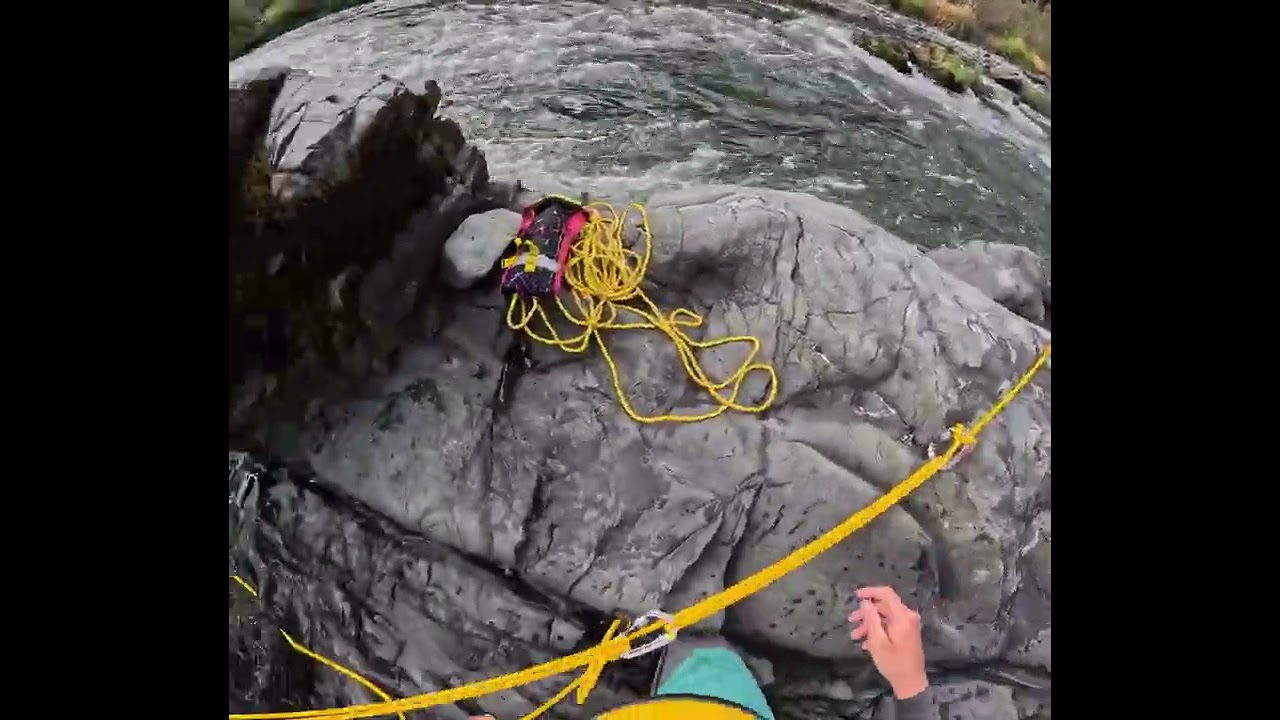
The accident site is complicated to access, I tried with no success on Friday 9/25 to pull the raft out from under the log to River left. The part of the log that needs to be cut has a little bit of water going over it. The location that someone would need to stand to cut it with a chainsaw is very dangerous if the raft or the log were to shift or the Sawyer were to fall in to the river. I think the best (safer) route is to use a pole saw. It might also be possible to put together a cutting chain “finger chainsaw” style and have people stand on either side and cut from the underside of the log upward. The raft is creating upward pressure on the log and so cutting from top down will risk pinching the bar if not done correctly.
Right now is an amazing opportunity to remove this deadly hazard because the water is low enough to actually see the log and work on it. The pinned raft is creating an additional severe hazard and also needs to be removed from the river for the safety of River users. Commercial outfitters and private boaters running the Rogue, what do you think needs to be done? What approach would you use to cutting an underwater log?
That’s ugly. I think it would be easier, and better, long-term, to focus on getting the log out, rather than the raft. What would happen if you switched from anchoring to the raft, to anchoring to the log? Could you move it or break it? Otherwise, a saw and a lot of time. Pole saw seems like a safe idea, or the cable-saw idea you had. Maybe both. Cut a bit and weaken the log, then pull and break it? I applaud your efforts so far.
Maybe this isn’t the best idea, but what about pulling from river right and “folding” the boat over the log and just yanking hard on it? Or using 3 oars to create a tripod on the rock island to redirect the pull “up” and off the rock?
This is an update about the removal of the wood hazard and pinned raft in Wildcat rapid on the Rogue River.
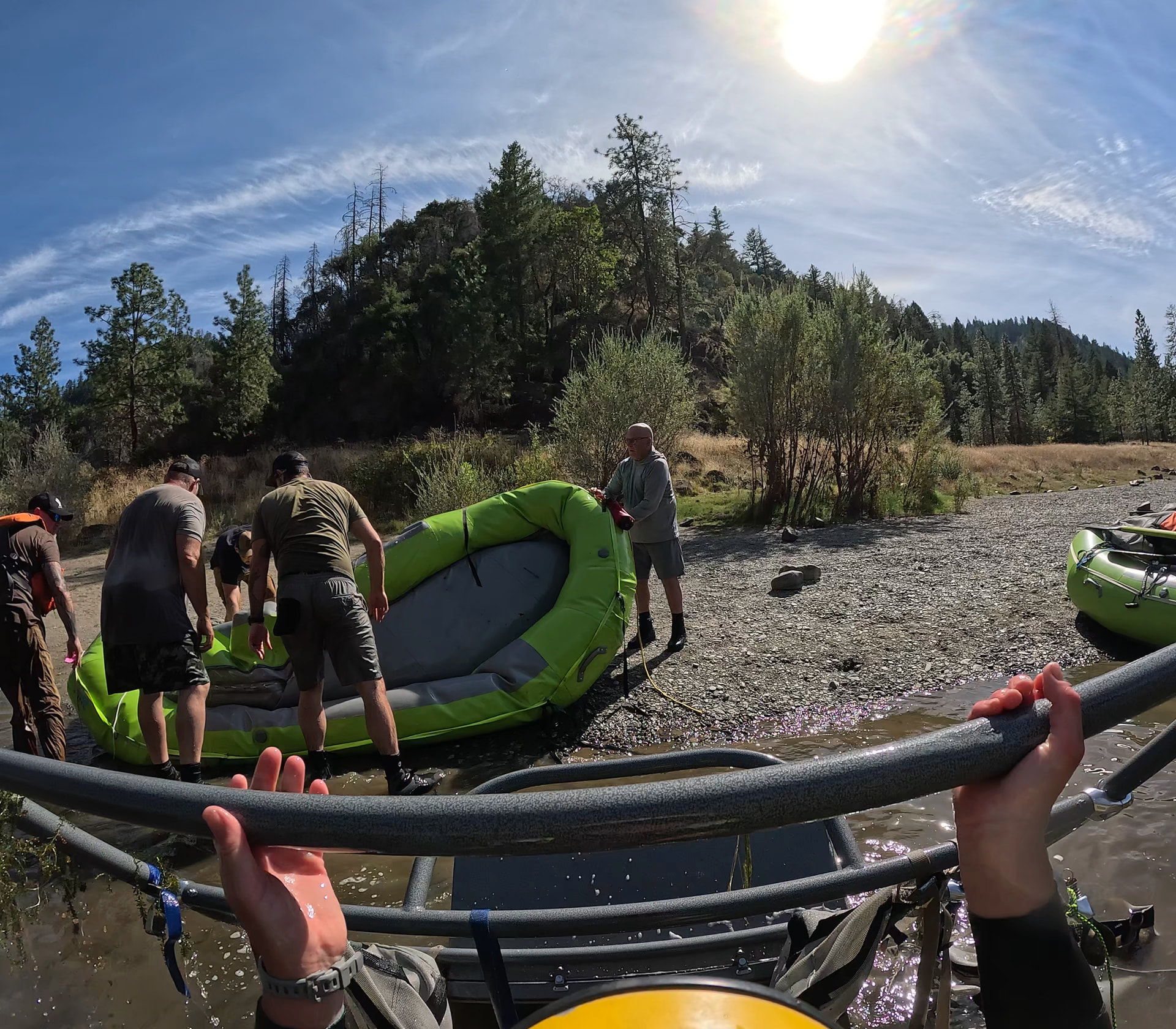
The boat was pinned upside down under the log for 7 days before I put together a team of volunteers to come cut the wood out of the slot on Friday 10/02/06. As soon as we removed the wood, the raft was able to float free and was recovered undamaged. I coordinated with the BLM rangers, who had approval to help with comms on the right hand bank. One ranger stayed upstream at Tyee and directed traffic to the right. Unfortunately, the BLM rangers were not able to get approval from the Oregon State Marine board, the Marine deputy, nor their BLM supervisor to try and remove it themselves due to the risk involved in accessing the site and working around the log and upside down raft.
About why this log was dangerous for downstream traffic and to work around:
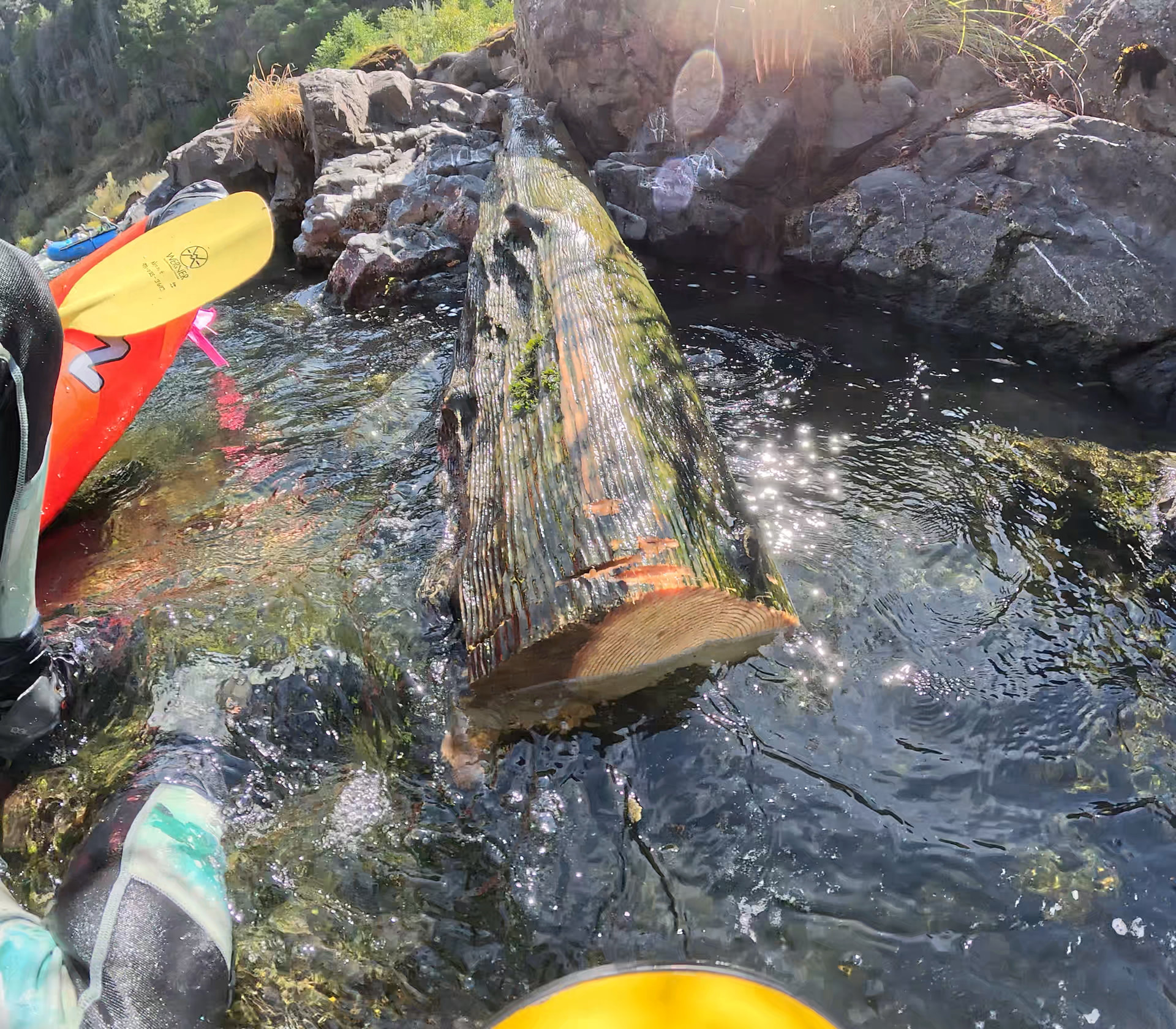
The primary objective was to remove the log from the slot, and therefore mitigate the hazard for River users in the coming years. This log had been here for many years and its general location in the rapid is associated with 2 fatalities from inflatable Kayaks recently. It only becomes visible at 1,000 CFS or lower. At normal summer flows of 1500-2500, the log was mid current just below the surface with a ton of water funneling under it and into the bedrock slot, creating a bad entrapment hazard. The way the current pushes into this slot in the very center at the bottom of the rapid, it is likely for rafts or kayaks that are out of control to flip or pin here when they accidentally jam into the slot. That means anyone falling out during a flip in the slot would be swept underneath the log and pinned to the bottom of the river. The slot is about 6 ft wide and the log spanned the entirety of it at a left to right angle and was about 9 ft long. The raft pinned underneath of the log actually presented a great opportunity to access the log, which is normally more underwater.
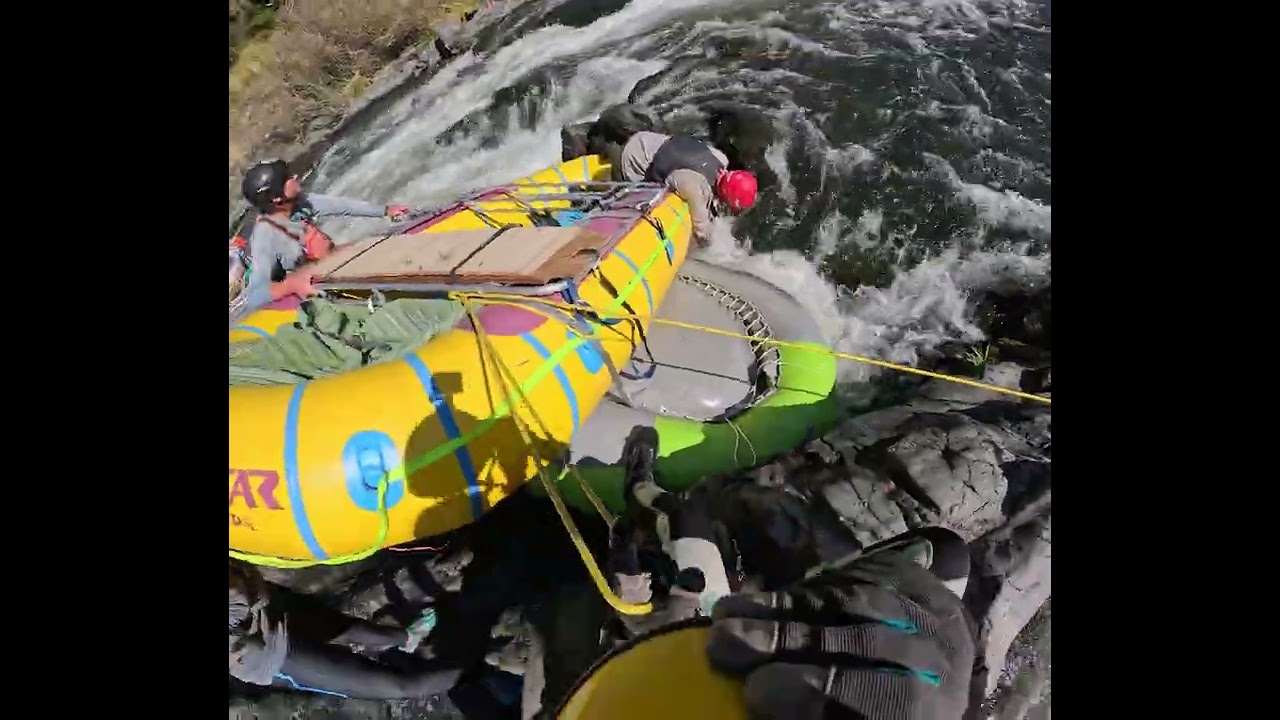
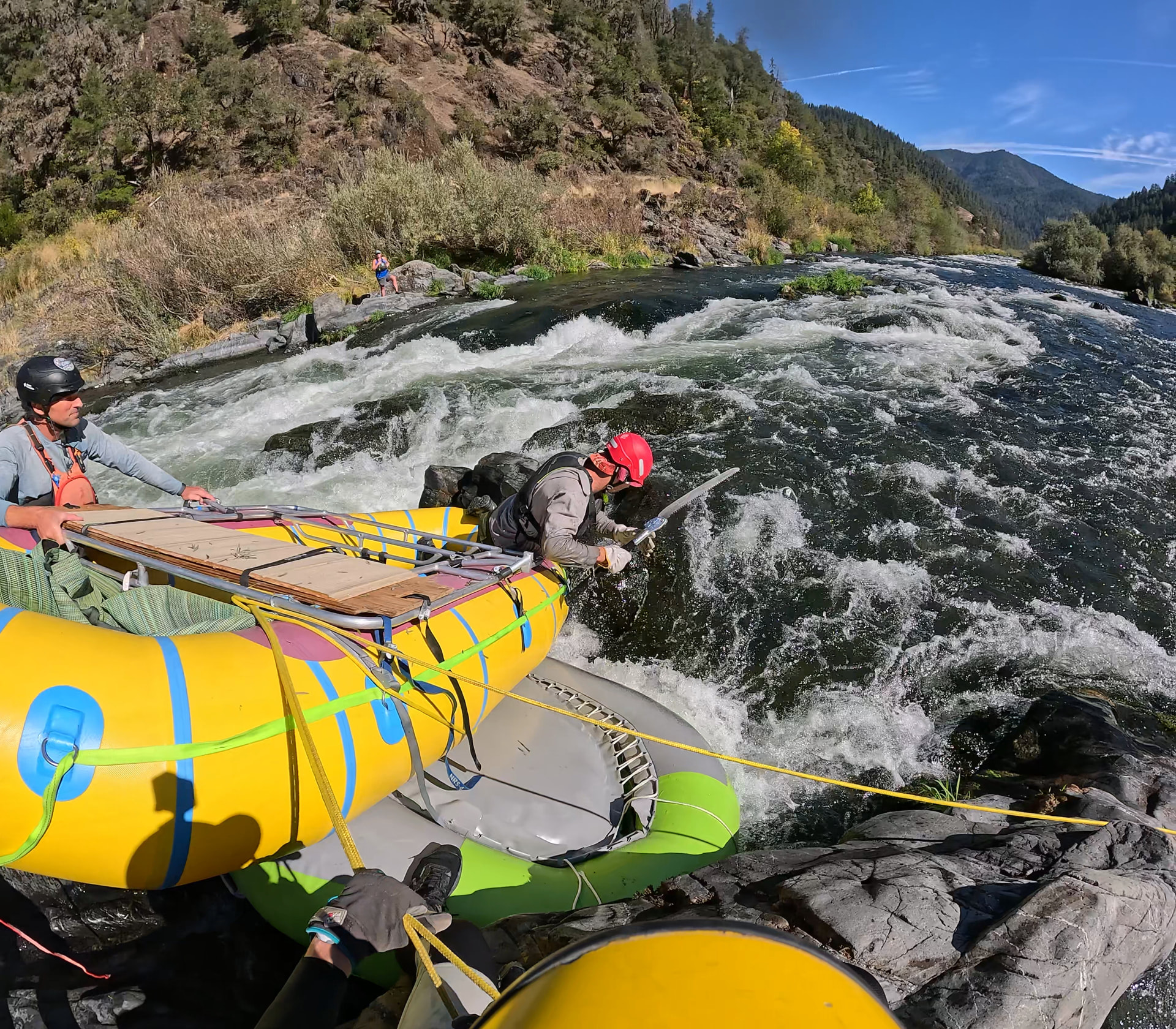
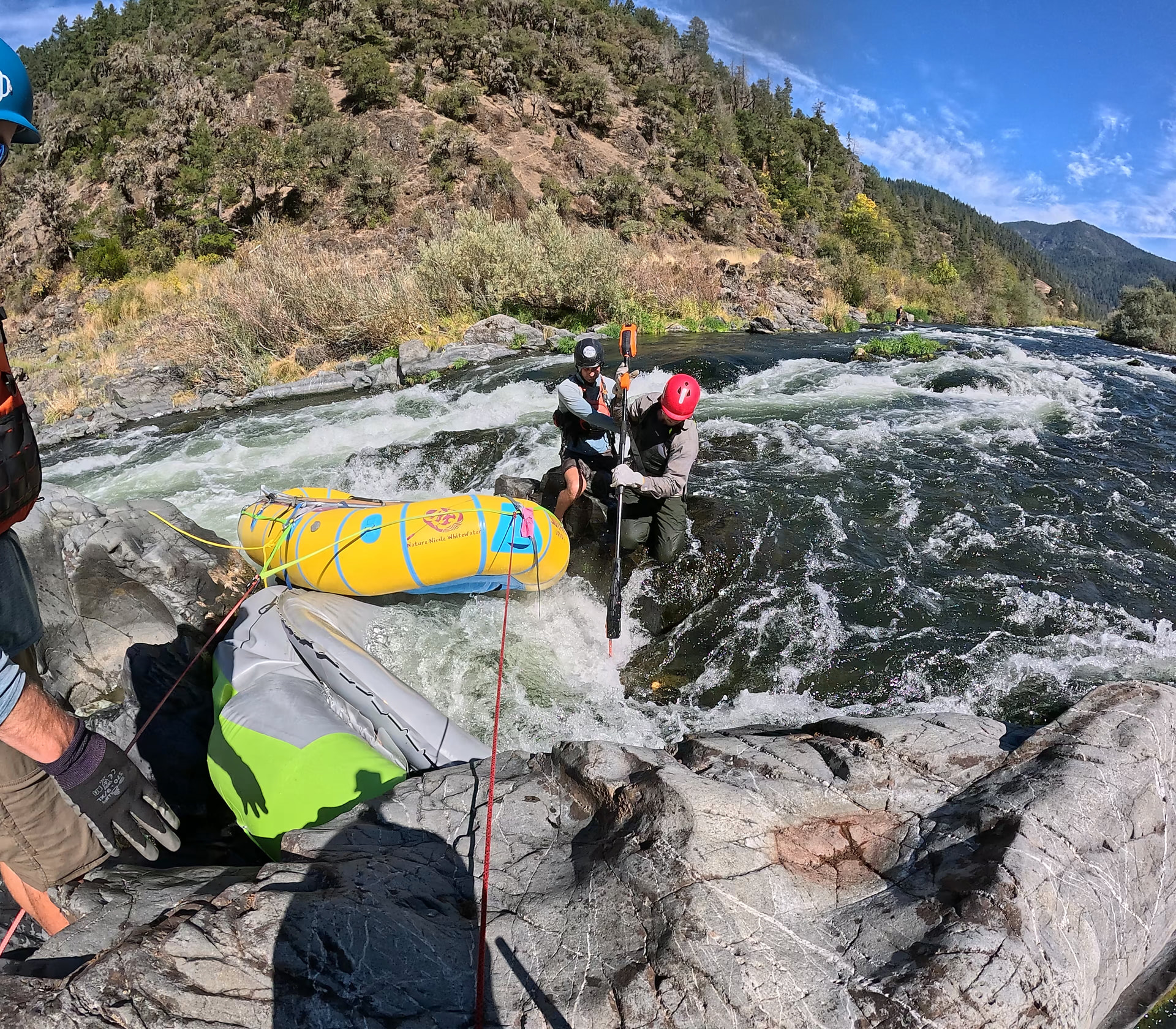
The flotation of the green raft pushing up on the log created a problem for cutting the log from the top down, and so in order to not pinch the saws while we were working, we set another raft on top of the log/ accident site to hold pressure and hold the cut open. This yellow raft was also a great platform for walking back and forth and for reaching into the water to feel around and make cuts to get the sawing started. We used four different saws (and broke one of them) and it took about 10 people in total to complete the effort. We employed a piece of plywood to create a temporary dam upstream of the cutting location. After completing the log removal, there is still some wood, deep underwater and just upstream of the cut, which appears to be a rootwad on the bottom of the river. The root wad was not removed at this time and is likely part of a complex series of other underwater hazards in this rapid that include seives, undercut rocks, and unknown woody debris on the bottom. Please be careful and take Wildcat rapid seriously.